
PRECA Les Fruits de Saint-Aubin: 234 kWp PV + 350 kWh BESS
How an apple producers' cooperative pairs an existing 234 kWp rooftop solar plant with a 350 kWh Battwoo battery to power a 24/7 apple pre-grading line. +50 % self-consumption, 5-year ROI, 20 % IRR projected.
- Solar self-consumption
- 24/7 agri-food operations
- Apple pre-grading line
- PV peak power
- 234 kWp
- Storage capacity
- 350 kWh (Battwoo)
- Hybrid inverter
- 100 kW
- Self-consumption gain
- +50 % (projected)
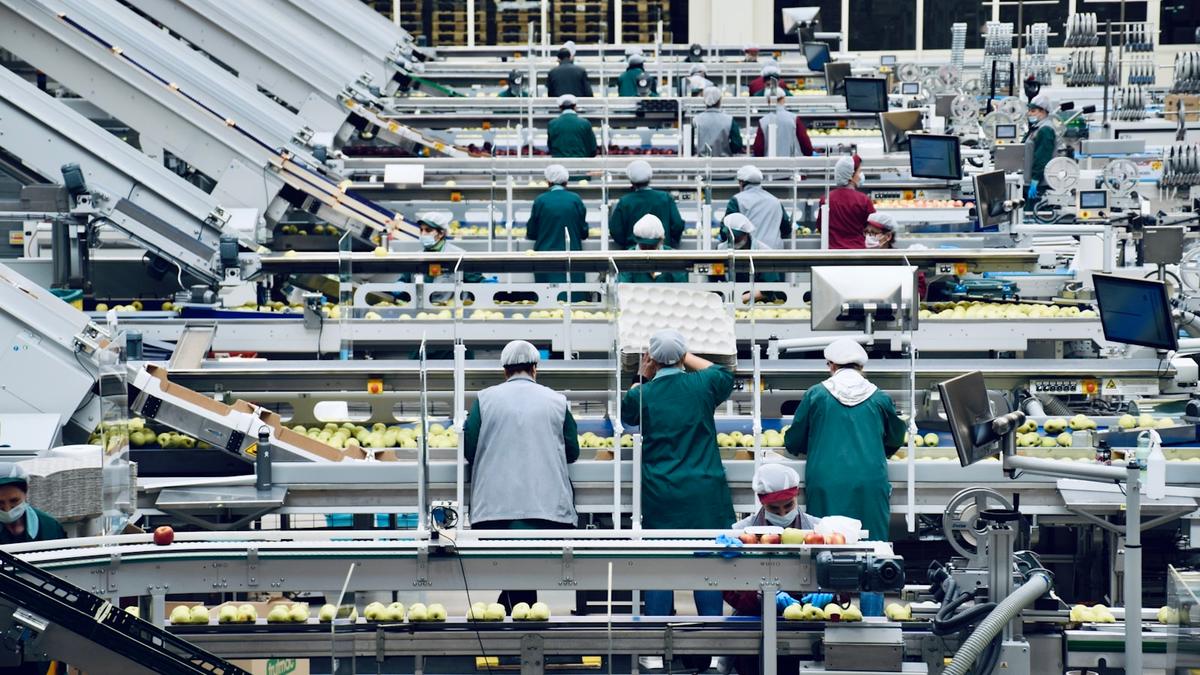
Already pioneers in their energy transition with rooftop photovoltaic panels, the members of the apple producers' cooperative (PRECA Les Fruits de Saint-Aubin) took a new strategic step with Battwoo: adding stationary storage to their existing 234 kWp plant to power their apple pre-grading machine running 24/7.
Why a storage project for a cooperative already equipped with PV?
Before Battwoo's intervention, the site already had a fully working rooftop PV installation. But like any solar production, it stops at sunset — while the site's main load, the apple pre-grading machine, runs continuously, 24/7 and 7 days a week.
Daytime production therefore covered only a fraction of the demand. At night, every kWh consumed was bought back from the grid, weighing on the cooperative's economic balance.
The challenge: how to optimise daytime solar output to meet steady 24/7 demand? The answer lies in storage.
Why is stationary storage relevant for three-shift industrial operations?
A machine running continuously is a load profile that fits a BESS particularly well. Three traits explain why:
- Continuous 24/7 demand — the mismatch with daytime PV production creates a structural need for stored energy at night.
- Stable and energy-intensive profile — regularity simplifies sizing and improves payback predictability.
- Critical continuity requirement — a production stop means significant delay. A BESS contributes to the site's energy security.
By integrating a Battwoo battery system, the cooperative can monetise its solar electricity well after sunset, ensuring continuity while smoothing its grid consumption.
What did Battwoo specify for this project?
The existing 234 kWp rooftop PV plant
The site rooftop already carries 234 kWp of photovoltaic panels. This pre-existing installation remains in place — the Battwoo project is built around it, not replacing it.
A 350 kWh Battwoo battery
The Battwoo stationary storage unit has a 350 kWh capacity. It absorbs surplus solar output produced during the day and releases it after sunset to power the cooperative's consumption.
Projected results
The techno-economic study delivers three particularly favourable indicators:
- +50 % self-consumption — intermittent solar energy becomes a controllable, secure resource extended into the night.
- Projected return on investment (ROI): 5 years — a short horizon for an agricultural industrial investment.
- Projected internal rate of return (IRR): 20 % — a very high return level over the project lifetime.
Those performances rest on the combination of a 24/7 load profile and sizing tailored to the existing PV output.
A Battwoo turnkey delivery
For this project, Battwoo covers the whole value chain:
- Custom sizing — site load curve analysis, PV + BESS coupling simulation, economic modelling.
- Manufacturing — workshop assembly of the storage unit from diagnosed and certified second-life battery modules.
- Installation — on-site mounting, integration with the existing PV, hybrid inverter wiring.
- Commissioning — energy-management setup, compliance checks, operator training.
A collaboration that illustrates the alliance between the agri-food industry and energy storage. To assess a similar project on your operation, request a personalised Battwoo study.
Frequently asked questions
What are the installed power and capacity figures?
Production side: 234 kWp PV (existing rooftop, kept in place). Storage side: 350 kWh / 100 kW for the Battwoo unit coupled with a hybrid inverter.
Did the existing solar plant need to be modified?
The Battwoo project integrates with the existing PV installation via the hybrid inverter. The 234 kWp plant remains in place — no panel replacement.
Why is storage particularly relevant for continuous consumption?
Because consumption is steady 24/7 while solar production only occurs in daytime. Without storage, night-time energy is entirely bought back from the grid. With storage, daytime surplus covers a significant share of night-time demand.
What is the projected ROI for the project?
Full payback projected at 5 years, with a projected internal rate of return (IRR) of 20 %. Numbers come from the upstream techno-economic study.
Does Battwoo cover the whole project or is a third-party integrator needed?
Full turnkey delivery at Battwoo: sizing, workshop manufacturing, on-site installation, commissioning. A single point of contact from design to operation.
About this case study
Techno-economic study delivered by Battwoo. Project sized and costed, not yet built at publication date. The indicators (+50 % self-consumption, 5-year ROI, 20 % IRR) are projections from the sizing model, not post-installation readings. To assess a similar project on your operation, get in touch.