
Padel club: 320 kWp PV + 350 kWh BESS, peak-shifting
How a Padel club turns nighttime floodlight load into an economic advantage: 320 kWp rooftop PV, a 350 kWh / 120 kW battery, and peak/off-peak shifting — without a feed-in contract.
- Solar self-consumption
- Time-of-use shifting
- Floodlight load
- PV peak power
- 320 kWp
- Storage capacity
- 350 kWh (Battwoo)
- Discharge power
- 120 kW
- Self-consumption gain
- +62 %
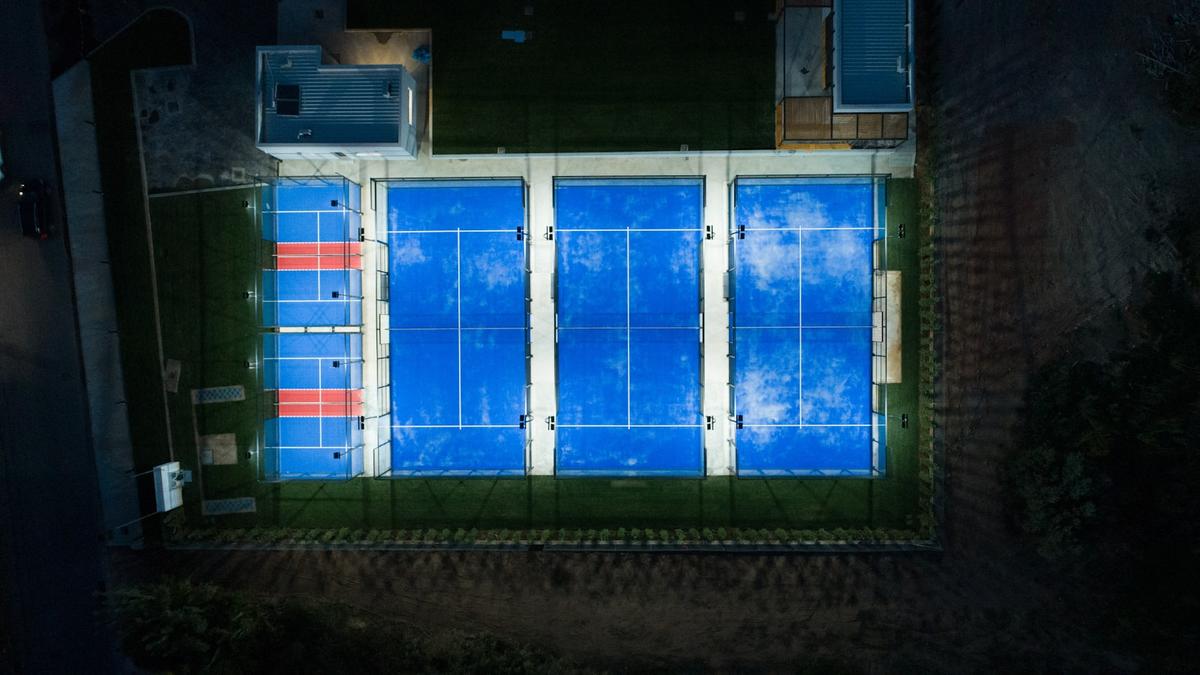
At a time when many sports facilities are turning to photovoltaics, a Padel club ran into a problem: high electrical consumption running until the midnight closing, well after sunset, while rooftop PV output is concentrated during the day. How to turn that mismatch into an economic advantage? Here is the storage architecture Battwoo specified.
What are the results of Battwoo's techno-economic study?
Working with the club's management, Battwoo ran an in-depth study. The conclusion is clear: to maximise autonomy, the goal was not to sell back surplus — especially since feed-in tariffs have dropped sharply in recent years.
Instead, by storing un-consumed solar surplus in a Battwoo storage solution, the site gains autonomy, cuts its electricity bill and makes its energy controllable.
A 320 kWp rooftop PV plant
Installation of 320 kWp of rooftop photovoltaic panels, sized to produce the energy that will be consumed in the evening through the battery — and not to target an optimal feed-in rate.
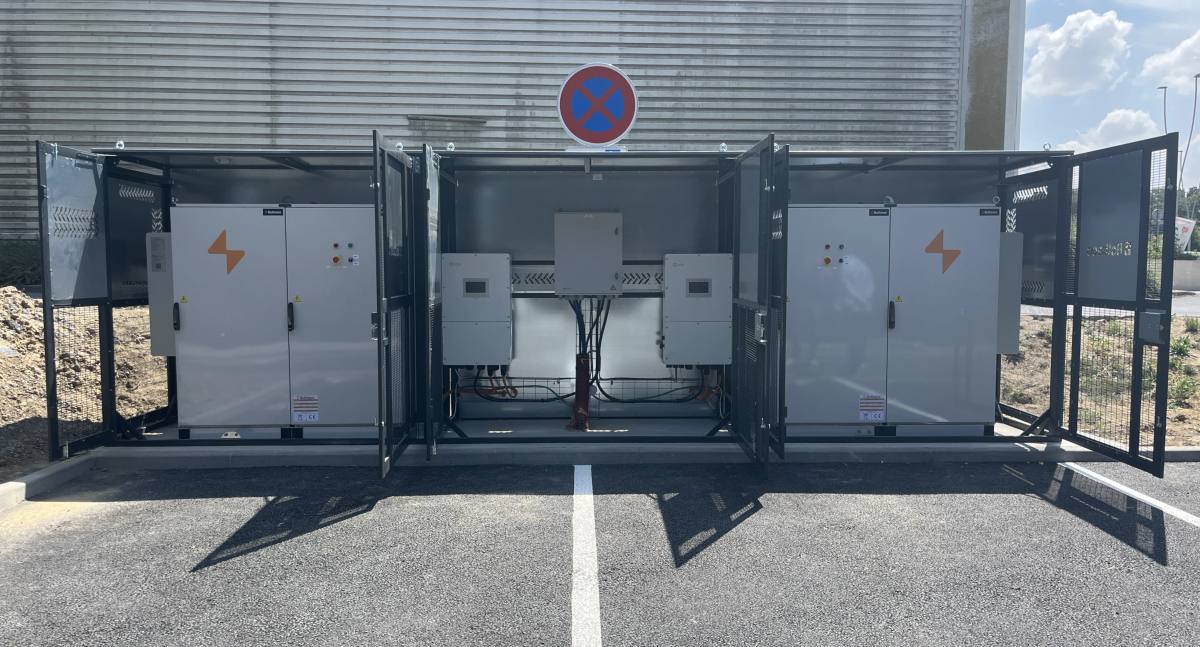
A 350 kWh / 120 kW battery
The Battwoo stationary storage unit has a 350 kWh capacity coupled with a discharge power of 120 kW. That power is sized to absorb simultaneous power calls when lights switch on across all courts, without drawing from the grid.
How does the dual-lever control strategy work?
The system is configured to act on two major financial levers.
1. Self-consumption
The battery captures solar surplus and releases it in the evening.
2. Peak / off-peak shifting
When the battery is not fully charged by solar (winter days, low-irradiance weeks), the system charges the battery during off-peak hours (reduced rate) to discharge during peak hours (peak rate). The club escapes grid-price volatility.
Benefits for the club
The installation no longer serves merely to « do solar » — it becomes a financial-control tool:
- Maximum value capture — by avoiding resale, the club consumes the vast majority of its own production.
- Cost control — lighting, formerly a variable and costly expense line, is now smoothed thanks to strategic storage.
- Operational resilience — the facility hedges its business against tariff peaks, ensuring profitability on its evening time slots.
Battwoo's takeaway
This project illustrates that a PV installation on its own is often an incomplete solution.
At Battwoo, we design storage systems that let businesses decide when they consume their energy, independent of sunlight schedules. To assess a similar configuration at your site, request a personalised Battwoo study.
Frequently asked questions
What are the installed power and capacity figures?
Production side: 320 kWp of rooftop PV. Storage side: 350 kWh capacity with 120 kW of discharge power.
Why not sell solar surplus back to the grid?
Because in 2026, the feed-in tariff for small installations is far below the peak-hour purchase cost. Consuming your own kWh (or storing it for later consumption) displaces a much larger expense than resale generates.
How does peak / off-peak shifting work for this profile?
When the battery is not topped up by solar (low season, overcast skies), it is charged from the grid during off-peak hours (reduced rate) and discharged during peak hours (peak rate) to power the site.
Does Battwoo cover the whole project or is a third-party integrator needed?
Full turnkey delivery at Battwoo: techno-economic study, sizing, workshop manufacturing, on-site installation, commissioning and arbitrage-strategy setup.
About this case study
Techno-economic study delivered by Battwoo. Project sized and costed. The benefits described (100 % self-consumption, smoothed lighting costs, resilience against tariff peaks) are projections from the sizing model. To assess a similar project on your sports facility, get in touch.