
Load curve analysis: the key to right-sizing a BESS
Before investing in stationary storage, downloading and reading your site's load curve is essential to size a BESS correctly. Method for industrial, tertiary and logistics sites.
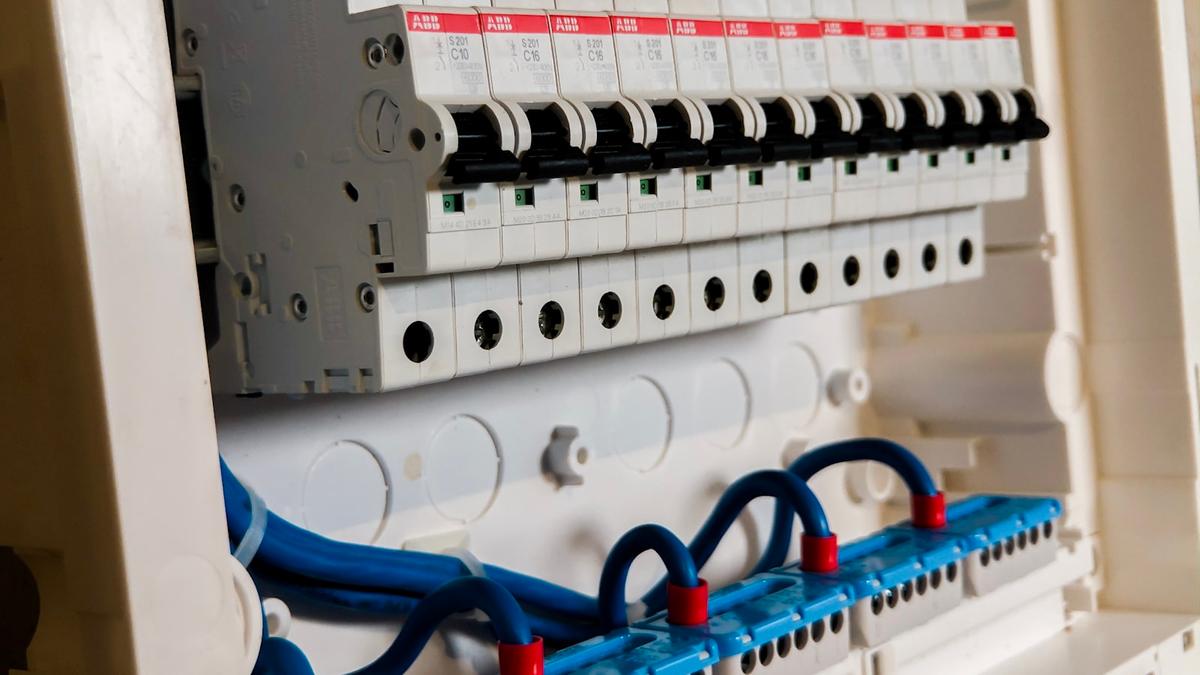
Before any stationary storage project, one piece of data matters more than every estimate combined: the site's actual load curve. It reveals power peaks, the on-peak/off-peak split, and the correlation with potential PV output. It is what ultimately drives the capacity and power of the BESS you will install.
Whether you are an SME on the French yellow tariff or an industrial site on the green tariff, the procedure to retrieve a load curve is standardised today. Here is how to obtain and exploit yours to drive an investment decision.
What is a load curve?
A load curve is a record of the electrical power drawn by your site, measured at regular intervals (typically every 10 or 30 minutes). It is expressed in kilowatts (kW), and should not be confused with energy consumed (kilowatt-hours, kWh), which is the integral of power over time.
Concretely: if a workshop draws 120 kW from 8 am to 6 pm, its load curve shows a 120 kW plateau over those 10 hours, and the site will have consumed 1,200 kWh that day. Without a load curve, you only see “1,200 kWh consumed” — without knowing how that energy is distributed in time.
For a storage project (BESS), that fine-grained distribution is the sizing criterion.
How to retrieve your load curve depending on your meter type
Every site connected to the French Enedis grid today has a communicating meter and access to its load curve through the Pro Customer Portal. The detail differs depending on subscribed power.
Sites on the blue tariff (≤ 36 kVA) — Linky meter
This covers micro-businesses, small retail, offices and local branches. Linky was deployed by Enedis between 2015 and 2022 across the entire blue-tariff base, professional included.
Procedure:
- Log in to your company Enedis space with your professional credentials.
- Get your Delivery Point number (PDL) from a recent invoice or directly off the meter display.
- Enable load-curve recording (a one-year renewable consent must be granted).
- Download the data as CSV or browse interactive histograms directly in the portal.
Sites on the yellow tariff (36-250 kVA) — PMEPMI / Saphir meter
Typical for industrial SMEs, production workshops, supermarkets, logistics warehouses. The PMEPMI meter has built-in telemetering that sends the load curve to Enedis every day.
Access goes through the same portal (espace-client-entreprises.enedis.fr) with a standard 10-minute granularity. Up to 36 months of history can be exported. For a BESS project, export at least the last 12 months to cover seasonal variations.
Sites on the green tariff (> 250 kVA) — ICE telemetering
Used by large industrial sites, major logistics platforms, corporate headquarters. Access also goes through the Enedis Pro portal, and data is additionally available through your electricity supplier (EDF Entreprises, alternative suppliers) which provides dedicated dashboards.
If the site already participates in a market mechanism (NEBEF demand response, balancing, capacity), data is also available from RTE Services.
What indicators to extract from a load curve
Once the CSV is downloaded, four metrics summarise the BESS opportunity on your site.
1. Peak-to-subscribed-power ratio
Identify the maximum power reached over the year (P_max). Compare it to your subscribed power (P_sub). If P_max is close to or exceeds P_sub, you are paying overage fees on your TURPE invoice — a typical peak-shaving case where a BESS shaves peaks and lets you lower the subscription level.
2. On-peak/off-peak split over 24 h and over the year
On an average day, what share of energy is consumed during peak vs off-peak hours? If the peak share is above 60 %, a time-of-use shifting strategy (charging the battery during off-peak hours, discharging during peak) generates measurable tariff arbitrage. The wider the peak/off-peak spread, the faster the ROI.
3. Seasonal profile
Compare January to July. Many tertiary sites consume more in summer (cooling), many industrials consume more in winter (heating, hot water for process). This determines whether the battery will be more useful in summer (maximum PV coupling) or in winter (peak shaving on heating loads).
4. Correlation with simulated PV production
If you are considering (or already have) a rooftop PV plant, overlay your load curve with the theoretical PV production curve (try the PVGIS tool from the European Commission). The share of PV output not self-consumed in real time is exactly what the BESS will store. That is the minimum battery capacity to aim for.
How does this data concretely size a BESS?
The three key parameters of a Battwoo BESS depend directly on these metrics.
- Capacity (kWh) — driven by the volume of energy to shift within a day (PV surplus to store, or peak volume to shift to off-peak).
- Inverter power (kW) — dictated by the peak power to shave, or by the PV power to absorb instantaneously.
- Cycling profile — number of annual cycles planned: a key parameter for battery lifetime and performance warranty.
Without a real load curve, these three parameters are computed from average assumptions — with sizing errors of 30 % to 50 %. Under-sizing costs performance; over-sizing costs upfront capex.
Should I do the analysis in-house or get help?
If your company has an energy manager, they can typically retrieve, read, and analyze load curves. However, simulating different scenarios to identify the optimal battery sizing and precisely assess its profitability requires specific expertise.
At Battwoo, we have developed proprietary software that automates the analysis of the key value drivers of a storage system: the value of self-consumed energy no longer purchased from the supplier, TURPE optimization, off-peak/peak hour arbitrage, the evolution of self-consumption and self-production rates, as well as different electricity purchase and resale strategies.
This is where we step in. Through our simulations, we size batteries as closely as possible to actual operational conditions and provide all the economic indicators needed for decision-making: annual savings, return on investment, profitability rate, lifespan, and operating scenarios.
Request a personalised study: we analyze your load curves and, within two weeks, deliver a detailed, quantified sizing — the first step toward implementing your storage project.
Frequently asked questions
How many months of load-curve data should I analyse?
At least 12 consecutive months to capture seasonal variation. 24 months if possible to identify annual trends (business growth, process changes). Enedis keeps 36 months of history available.
Is my company on the blue, yellow or green tariff?
The tariff is shown on your electricity invoice. Quick rule: ≤ 36 kVA = blue (Linky), 36-250 kVA = yellow (PMEPMI), > 250 kVA = green (ICE telemetering). Subscribed power is also stated on the invoice.
Does the property owner need to authorise access to the load curve?
No. The operator holding the supply contract has access to the load curve of their delivery point through the Enedis Pro portal, without input from the building owner.
What if I do not yet have PV — is the load curve still useful?
Yes — and that is where it adds the most value. With no PV in place yet, the load curve lets you simulate the optimum PV peak power to install and the PV/BESS ratio that maximises self-consumption. It is the foundation of any rigorous solar-plus-storage business case.
How long does a professional load-curve analysis take?
At Battwoo: between 5 and 10 working days from data receipt. The deliverable includes a techno-economic study with costed scenarios (battery capacity, ROI, annual saving, financing curve).